TRIPP Corridor Could Reroute South Caucasus Trade, but Not Before 2029
The 'Trump Route' agreed in Washington in August 2025 promises Armenia a 42-km rail link to Iran, Turkey and Central Asia — but analysts doubt operation before 2029.
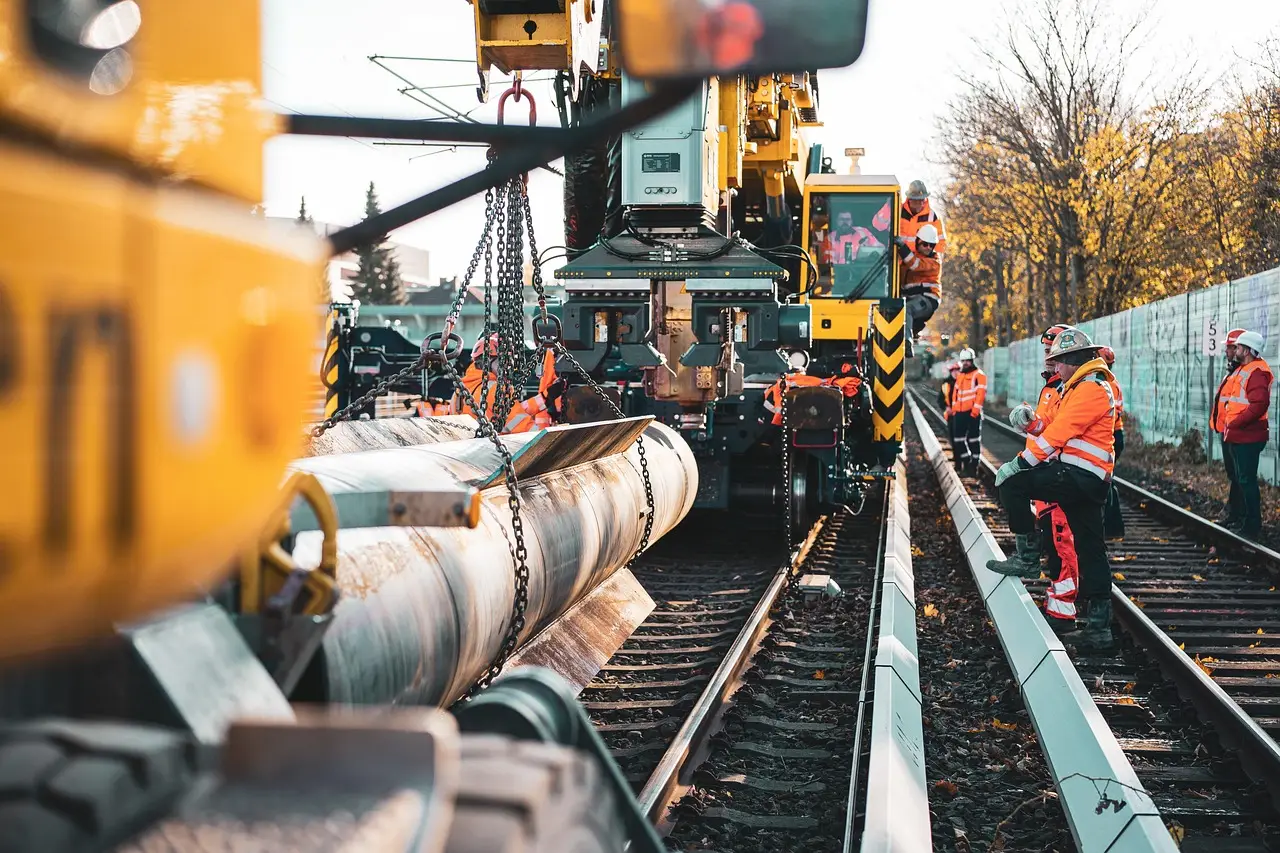
A 42-kilometre railway section through Armenia sits at the centre of the "Trump Route" (TRIPP), a transport project agreed in Washington in August 2025 by the leaders of the United States, Armenia and Azerbaijan — and, according to commentary in Kommersant, it could redraw the logistics map of the South Caucasus, though not on any near-term horizon.
The project, as framed by the three governments, covers road and rail infrastructure plus oil and gas communications. For Armenia, the prize is a railway outlet south to Iran, west to Turkey via the existing Gyumri–Kars line, and onward into Europe. It also widens Armenia's trading reach toward Central Asia, India and China — one branch of the old Silk Road network.
What does the corridor actually connect?
Armenian journalist Mark Grigoryan laid out the mechanics in comments cited by Kommersant. "This railway branch opens direct communication for Armenia with Central Asia and beyond. That is India, China and one of the branches of the Great Silk Road. It is a short path for Armenia into Iran. Whatever political and geopolitical upheavals occur around Iran, Yerevan has good relations with that country," he said.
The same track serves Azerbaijan's interests. Grigoryan noted that the route would link mainland Azerbaijan with its Nakhchivan exclave, a connection Baku has long sought. The Gyumri–Kars line would then tie the wider region into Turkey's transport network.
His verdict on the economics was blunt. "Economically, this small piece of railway turns out to be very important and very advantageous, in effect, for all sides," Grigoryan said.
Why is the timetable longer than the map suggests?
Three constraints temper the optimism.
- The Russia question. Armenia's railway infrastructure sits in a Russian concession. Whether Moscow participates, and on what terms, remains unresolved.
- The peace's fragility. The rapprochement between Yerevan and Baku has not hardened into a durable settlement, and any railway crossing the seam of that settlement depends on it holding.
- Iran's position. Tehran has previously declared certain implementation variants unacceptable, and its consent shapes the southern leg.
Grigoryan doubts delivery this decade. "This is not a fast project; it will not be realised in 2027 or even in 2028, as it seems to me," he said.
What has been agreed so far?
The August 2025 Washington meeting produced a work plan rather than construction dates. The three sides agreed to set up a trilateral group of diplomats and technical specialists. Two further working groups will focus separately on transport infrastructure and on electric power. Their mandate is to prepare the conditions for practical implementation of the project.
The Armenian section of the route is pegged at roughly 42 kilometres of new railway — a short build by absolute measures, but one that must thread through a corridor where three regional powers hold veto-sized interests.
For shippers and traders, the calculus is straightforward. If the line opens, Armenia gains a land bridge it has never had: south to Iranian ports and markets, west through Kars into Turkey and Europe, east into Central Asian and Chinese freight flows. Until the political substrate stabilises, however, the 42 kilometres remain on paper — and the South Caucasus keeps moving goods the way it does today.
Основные выводы
- The US, Armenia and Azerbaijan agreed to create the Trump Route (TRIPP) at a Washington meeting in August 2025.
- The Armenian section of the route covers approximately 42 km of railway.
- Armenian journalist Mark Grigoryan says the project will not be realised in 2027 or even 2028.
- Armenia's railway infrastructure is held in a Russian concession, an unresolved variable in the project.
- Side agreements include a trilateral diplomatic-technical group and separate working groups on transport and power.
Источник https://news.am/ru/news/1073442
Ещё от Наталья Гончар
Показать полностью
Обозреватель «Shelf Herald», освещает люди и практика: Shelf Herald — двуязычное (русский/английский) независимое деловое СМИ.
18 статей
Смежные отделы
- Kazakhstan, Armenia weigh TRIPP link as Middle Corridor grows 58%
- US, Armenia and Azerbaijan Launch Working Groups on Trump Route
- Kazakhstan and Tajikistan agree to digitalise freight flows
- Uzbekistan Logs 100,000 TEU by Rail but Dry Ports Still Don't Work as One System
- Kazakhstan–Tajikistan trade up nearly 26% to $1.13 billion